
Today’s parents are always looking for enjoyable and instructive methods to help their children flourish. Nursery Rhymes For Toddlers is one of the most efficient and ageless ways to learn. These basic songs and rhymes are not only fun and games. They are important in helping young children develop linguistic abilities, memory, creativity and emotional intelligence.
From “Twinkle Twinkle Little Star” to action-based rhymes, music, rhythm and repetition are inherently engaging to children. Studies in early childhood education indicate that youngsters exposed to rhymes and musical learning activities get more robust vocabulary and listening abilities early on. “Rhythmic learning activities can increase memory retention by up to 40% during the preschool years,” child development specialists say.
How Nursery Rhymes Accelerate Toddler Learning
Nursery Rhymes For Toddlers is the greatest fun in learning. Toddlers learn best when they are interested and rhymes provide the ideal atmosphere for engagement.
Kids like rhymes:
1.Improve Vocabulary And Pronunciation.
2.Improve Your Listening And Listening Abilities
3.Reinforce Memory Via Repetition
4.Learn Patterns Of Sound And Rhythm.
5.Talk With Confidence
For example, a mother was teaching her 3-year-old son rhymes everyday, and then she realized that after a few months the boy was able to recognize colors, animals and basic numbers more quicker than previously. The repetition of rhymes made it easier for him to memorize words without feeling a strain.
Experts also say that music-based learning activates many parts of a child’s brain at the same time. This means children acquire language, as well as enhance cognitive capacities and creativity at the same time.
The Effect of Rhymes on Child Development in Real Life.
Today’s parents are frequently caught between educating and staring at screens. The problem is selecting stuff that is safe and instructive. That’s where superior learning systems come into play.
Many parents have noticed that their children are more attentive and expressive while learning via songs and animations. For example, one preschool teacher reported that timid children in her class were more involved after engaging in rhyme-based activities. Singing together helped build collaboration, communication and emotional connection amongst youngsters.
Research in education has shown that babies who participate in music learning activities are more likely to gain early reading abilities before they join school. Often these youngsters may identify sounds, letters and patterns of words faster than others.
This is why more and more parents choose for digital education solutions that provide kids pleasant, yet important, learning experiences.
Why Digital Learning Apps Are Gaining Popularity
Children nowadays are naturally drawn to interactive visual effects, noises and animations. Learning applications for toddlers may make learning a fun activity.
But parents are cautious in choosing the correct platform, as not every software provides high educational value. The best learning app must:
1.Be Child-Safe And Welcoming
2.Add Interactive Learning Activities
3.Encourage Creativity & Imagination
4.Enhance Problem-Solving Abilities
5.Support Emotional And Cognitive Development
This is where Edugamingappworld comes in as a trusted solution for parents who want superior educational experiences for their kids.
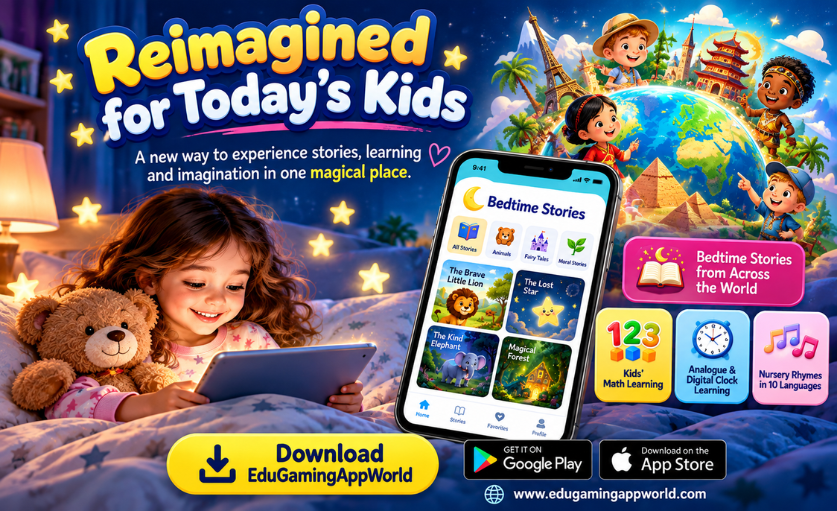
Edugamingappworld: The Fun Way Of Learning
Edugamingappworld is dedicated to creating a next-generation ecosystem of educational learning applications that inspire enjoyable learning for every kid in an inclusive way. Their objective is to provide youngsters fun digital experiences which will build their cognitive capabilities, creativity, imagination, decision-making skills and collaboration.
The platform’s balanced approach towards entertainment and education makes it incredibly impactful for parents. Instead of passive screen time, children engage in active learning that is meant to assist their entire development.
Their Instructional Applications Are Designed To:
1.Enhance Brain Development
2.Enhance Creativity And Imagination
3.Develop Decision Making Skills
4.Promote Co-Operation And Involvement
5.Make Learning Easy And Fun
Parents looking for consistent educational help might get lasting advantages for their child’s learning path by using a platform such as Edugamingappworld.
The Emotional Bond of Rhymes
An often overlooked advantage of Nursery Rhymes For Toddlers is emotional connectedness. Meaningful moments between parents and children are made by singing rhymes together. These activities encourage children to feel safe, loved and confident.
Children also learn to communicate their feelings via music and storytelling. Happy songs educate enthusiasm, soothing tunes promote relaxation, and action rhymes enhance physical coordination.
Many parents report that singing and playing with their kids for 15-20 minutes a day may lead to better communication and emotional ties.
Music and Imagination and How it Develops Creativity
Rhymes help youngsters to imagine people, activities and storylines. This creative thinking is vital in early infancy, since it helps toddlers develop creativity and problem-solving abilities.
Action rhymes with animals or tale rhymes urge youngsters to see pictures in their heads and move their bodies. This will be good for both cerebral and motor development.
There are educational applications that combine rhymes with animations and games, which makes this experience even more fun. Interactive learning techniques assist to keep children engaged for longer amounts of time and learn in a natural way.
Why Parents Should Get a Jump on Things
Early infancy is the most critical period for brain development. We know that almost 90% of brain development occurs before age five. This suggests that offering educational activities during toddler years has a huge impact on future learning ability.
Parents may provide a solid basis for their kids’ learning using fun techniques like rhymes, storytelling and interactive educational applications.
Selecting the correct educational support system is very crucial. Websites like Edugamingappworld assist parents to give relevant, fun and skill-building learning experiences which prepare children for future academic achievement.
Conclusion
Nursery Rhymes For Toddlers are just not easy music. They are potent learning tools that enhance language development, creativity, memory, and emotional growth. Today in our digital environment, the use of classic rhymes coupled with interactive educational technologies may provide even more powerful learning experiences.
If you’re a parent seeking for happy and successful learning experiences, choose educational platforms that really promote your child’s growth. Mission-driven Edugamingappworld is an engaging educational ecosystem for an invaluable learning environment where children may develop, play and study cheerfully every day.