


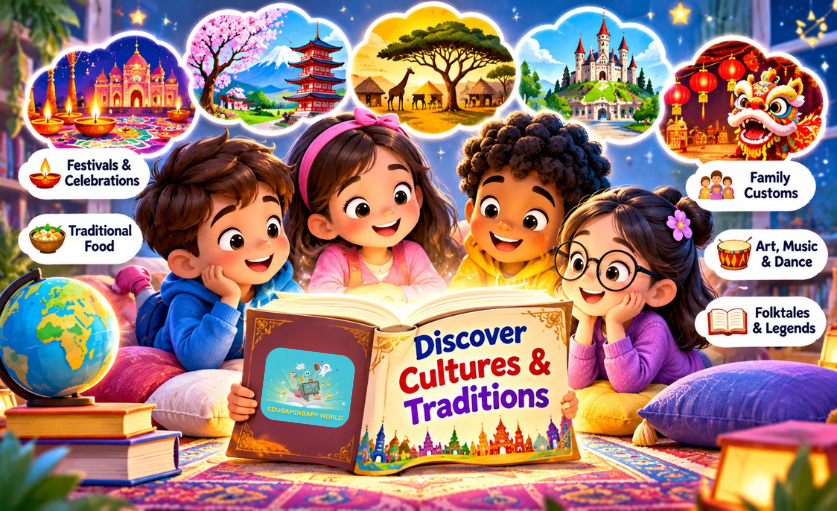
Children are naturally curious about the world around them. They wonder why people celebrate different festivals, eat different foods, wear traditional clothing, and follow special family customs. One enjoyable way to introduce these differences is through storytelling.
When children read or listen to stories from different places, they discover new traditions while following memorable characters and exciting adventures. Discover Cultures & Traditions through bedtime stories and help children build curiosity, respect, and appreciation for the many ways people live around the world.
For parents, bedtime storytelling can become more than a relaxing daily routine. It can open conversations about cultural diversity, family heritage, celebrations, and the values people share.
Why Should Children Discover Cultures & Traditions?
Learning about different cultures helps children understand that the world is full of different languages, customs, beliefs, celebrations, and ways of life. It also encourages them to appreciate people whose experiences may be different from their own.
Cultural Stories for Kids make these ideas easier to explore because children learn through characters, settings, and events rather than long explanations.
For example, a story about a family preparing for a festival can introduce children to decorations, traditional clothing, special meals, and the importance of spending time together.
Exploring cultures through stories can help children:
- Develop curiosity about different countries and communities.
- Understand that families may celebrate special occasions in different ways.
- Appreciate cultural diversity and different perspectives.
- Learn about traditions passed from one generation to another.
- Recognise shared values such as kindness, friendship, and togetherness.
The goal is not to memorise facts about every culture. It is to encourage respectful questions and an interest in learning about others.
How Bedtime Stories from Around the World Introduce Different Cultures
Bedtime Stories from Around the World can take children on imaginary journeys to different countries and communities. Each story can introduce a new setting, a family custom, a traditional celebration, or a local way of life.
-
Discover Festivals and Celebrations
Festivals are an engaging way to introduce children to cultural traditions. Many celebrations bring families and communities together through music, food, decorations, storytelling, and shared activities.
For example:
- Diwali in India: Families celebrate with lights, decorations, sweets, and time together.
- Lunar New Year: Celebrations in several East and Southeast Asian communities may include family gatherings, special foods, decorations, and traditions welcoming a new year.
- Christmas: Many communities celebrate with family meals, decorations, music, and gift-giving, although customs vary around the world.
- Eid Celebrations: Muslim families and communities may mark Eid with prayers, visits, festive meals, and acts of generosity.
A bedtime story about a child preparing for a celebration can help readers understand why the occasion matters to that family. Parents can also explain that traditions may differ between households and communities.
-
Explore Family Traditions Around the World
Family traditions are often small activities that carry special meaning. Some families prepare a particular meal on weekends, tell stories before bedtime, visit relatives during holidays, or celebrate important milestones together.
Stories about family life can show children how traditions connect generations.
For instance, imagine a story about a grandparent teaching a child how to prepare a family recipe. While following the story, children can discover how food, memories, and family relationships can be connected.
Parents can make this topic personal by sharing a tradition from their own family and inviting children to describe a favourite family activity.
-
Learn About Traditional Food and Everyday Life
Food is another interesting way to explore Cultural Traditions for Children. Different communities have special dishes associated with festivals, seasons, family gatherings, or everyday meals.
A story might introduce children to Indian dosa, Japanese rice dishes, Italian pasta, or Mexican tamales. The purpose is not simply to name foods but to explore the occasions and family experiences connected with them.
Children can also learn about everyday life in different places, such as how people travel, what homes look like, which languages they speak, and how children spend time with friends.
These details help make cultural learning relatable and enjoyable.
The Role of Folktales and Legends in Cultural Learning
Folktales and Legends are traditional stories that have been shared across generations. They often reflect the imagination, history, values, and storytelling traditions of particular communities.
Animal tales, fairy tales, hero stories, and legends can introduce children to different storytelling styles and cultural settings.
For example, the Panchatantra is a well-known Indian collection of animal stories that often explores wisdom and decision-making. Anansi stories are part of storytelling traditions associated with West Africa and the Caribbean. Japanese folktales include memorable characters and adventures that have been retold in different forms.
When sharing these stories, parents should explain their cultural origins where known and avoid suggesting that one tale represents every person in a country or community. Different versions may exist, and traditions can vary across regions and families.
How Cultural Diversity for Kids Builds Understanding
Introducing Cultural Diversity for Kids through stories can encourage children to approach differences with curiosity and respect.
A child might notice that characters speak different languages, wear different clothing, celebrate different festivals, or live in different kinds of homes. These observations can lead to useful conversations.
Parents can ask:
- What was different about the family in this story?
- Which tradition did you find interesting?
- What would you like to learn more about?
- Did the characters share any experiences with our family?
These questions encourage children to think rather than make quick assumptions. They also help children recognise that people can have different customs while sharing many feelings, hopes, and everyday experiences.
Practical Ways Parents Can Introduce Cultural Heritage for Children
You do not need to plan a special lesson to make cultural discovery part of family reading. A few simple activities can make bedtime storytelling more interactive.
Choose Stories from Different Places
Select stories with a variety of cultural settings, characters, and traditions. Over time, children can explore different regions and storytelling styles.
Look at Maps Together
After reading a story, find its setting on a map or globe. Talk about the country or region and what the characters experienced there.
Share a Family Tradition
Tell children about a celebration, recipe, song, or family custom that is meaningful to you. Explain why your family enjoys it.
Explore Food and Music
If a story introduces a traditional dish or musical instrument, learn a little more about it together. Keep the activity simple and suitable for your child’s age.
Encourage Questions
Children may ask why a celebration happens or why a character follows a particular custom. Treat these questions as opportunities to learn together. If you are unsure of an answer, explore it together using reliable, age-appropriate sources.
Explore Multicultural Bedtime Stories with EduGamingAppWorld
EduGamingAppWorld’s Bedtime Stories page offers families a place to explore storytelling, including traditional tales, fairy tales, legends, and stories with meaningful lessons.
Parents can use storytime to introduce children to new characters, places, and perspectives. After reading, a short conversation about a character’s family, celebration, or choices can help children connect the story with the wider world.
You can also explore related EduGamingAppWorld topics, including Life Skills & Values, to discover how stories can encourage positive values and meaningful conversations.
The best approach is to keep reading enjoyable. Let children choose stories that interest them, ask questions, and share their own observations.
Discover Cultures & Traditions One Story at a Time
Helping children Discover Cultures & Traditions can begin with something as simple as a bedtime story. Stories introduce young readers to festivals, family customs, traditional foods, folklore, and everyday experiences from different communities.
As children explore these stories, they can develop curiosity, appreciate cultural differences, and recognise the values people share. Parents can make the experience even more meaningful by discussing traditions, sharing family memories, and encouraging respectful questions.
With EduGamingAppWorld Bedtime Stories, every reading session can become an opportunity to imagine new places, learn about different ways of life, and enjoy the rich variety of stories found around the world.
DOWNLOAD APP
Google Play Apple App
FAQ
Why is it important for children to learn about different cultures?
Learning about different cultures can help children develop curiosity, respect, and appreciation for people with different traditions and experiences.
How do bedtime stories help children discover cultures and traditions?
Bedtime stories introduce cultural settings, celebrations, family customs, food, and folklore through characters and engaging events that children can understand.
What are some examples of cultural stories for kids?
Children can explore Panchatantra tales, traditional Japanese folktales, Anansi stories, fairy tales, and age-appropriate stories about festivals and family traditions.
How can parents teach cultural traditions at home?
Parents can read multicultural stories, share family customs, explore maps, discuss festivals, and introduce traditional foods or music in simple, enjoyable ways.
What can children learn from multicultural bedtime stories?
Children can learn about different communities, family traditions, celebrations, storytelling styles, and shared values such as kindness, cooperation, and respect.