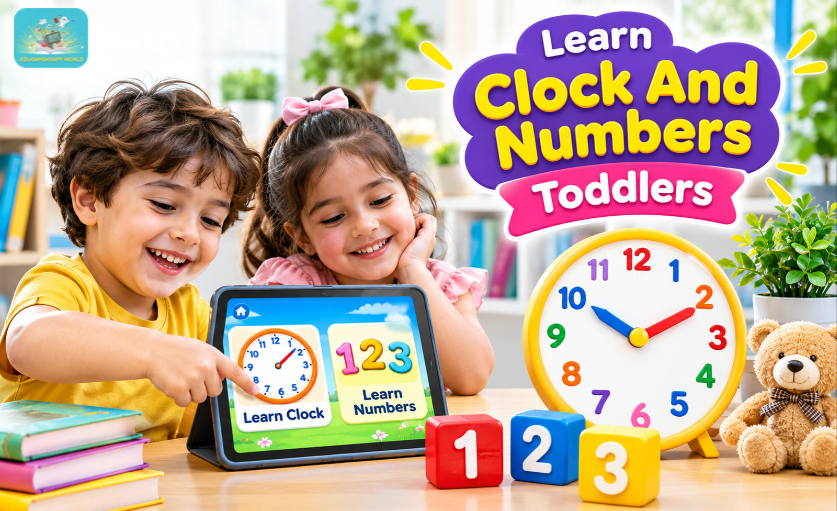
Learning is an exciting journey for young children. Every new number they recognise and every new concept they understand helps build a strong foundation for future education. Introducing clocks and numbers at an early age can make everyday experiences more meaningful and enjoyable. With simple activities, colourful learning tools, and interactive educational games, parents can help children develop essential early learning skills.
Learn Clock And Numbers Toddlers is an important part of early childhood education because it introduces children to basic mathematics, number recognition, and the concept of time through enjoyable learning experiences.
Let’s explore some fun and practical ways to introduce these concepts to toddlers.
Why Is Learning Numbers Important for Toddlers?
Numbers are everywhere in children’s everyday lives. From counting toys to recognising numbers on calendars, toddlers naturally encounter opportunities to develop early maths skills.
Introducing numbers through playful activities helps children:
- Recognise numbers from 1 to 10.
- Develop basic counting skills.
- Understand simple number sequences.
- Improve memory and observation.
- Build confidence in early mathematics.
Parents can introduce numbers through everyday activities rather than relying only on traditional teaching methods.
For example, ask your child to count three colourful blocks, identify five toy cars, or recognise numbers on a wall calendar. These small activities make learning more natural.
Why Should Toddlers Start Learning About Clocks?
Understanding time is another valuable early learning skill. Although toddlers may not immediately understand hours and minutes, they can gradually become familiar with daily routines and basic time concepts.
Clock learning for toddlers introduces children to:
- The appearance of analogue clocks.
- Numbers arranged around a clock face.
- The difference between morning and evening.
- Daily routines and familiar activities.
- Basic ideas about hours and minutes.
For example, parents can explain that breakfast happens in the morning and bedtime comes at night. Connecting time with familiar experiences makes the concept easier to understand.
7 Fun Activities for Teaching Time and Numbers to Toddlers
Children learn best when activities are interesting, interactive, and age-appropriate. Here are seven simple activities parents can try at home.
1. Count Colourful Toys
Collect colourful toys, blocks, or building pieces. Ask your child to count them one by one.
This activity supports number recognition, counting practice, and early mathematical thinking.
2. Explore a Colourful Clock
Introduce your toddler to a simple educational clock. Point towards different numbers and encourage your child to identify them.
Gradually explain how the clock helps people understand time.
3. Match Numbers with Objects
Write numbers on small cards and ask your child to match them with the correct number of objects.
For example, match the number 4 with four building blocks. This makes numbers learning for toddlers more practical.
4. Learn Through Daily Routines
Use everyday activities to introduce time concepts.
Explain that:
- Breakfast happens in the morning.
- Playtime can happen during the afternoon.
- Bedtime comes in the evening.
This helps children connect time learning with real-life experiences.
5. Play Number Recognition Games
Use colourful flashcards, number puzzles, and educational games to encourage children to recognise different numbers.
These activities can make early learning enjoyable while developing concentration and memory.
6. Sing Counting Songs
Counting songs and nursery rhymes introduce numbers through music and repetition.
Encourage your child to clap, count, and repeat simple number sequences.
7. Practise with Interactive Learning Apps
Digital educational activities can provide additional opportunities for children to explore numbers and clocks.
Choose age-appropriate apps with simple instructions, engaging visuals, and educational activities. Parents should participate and guide children during screen-based learning.
How Clock and Number Learning Develop Early Maths Skills
Clock learning and number recognition are closely connected to early mathematics.
When children explore a clock, they become familiar with numbers and their arrangement. They also begin developing an understanding of sequences, patterns, and relationships.
These experiences can support:
Number Recognition: Children learn to identify different numbers and understand their order.
Logical Thinking: Simple counting and matching activities encourage children to think and solve small problems.
Memory Development: Repeating number sequences and recognising clock patterns provides opportunities to practise remembering information.
Time Awareness: Familiar routines help children gradually understand the idea of time.
These skills create a foundation for more advanced learning as children grow.
Benefits of Interactive Learning for Kids
Traditional learning methods are useful, but combining them with interactive educational activities can make learning more engaging.
Some important benefits include:
- Better Engagement: Colourful visuals and playful activities can capture children’s attention.
- Active Participation: Children can practise identifying, counting, and matching.
- Learning at Their Own Pace: Children can repeat activities as they become more confident.
- Improved Curiosity: Interactive activities encourage children to explore new concepts.
- Enjoyable Learning Experiences: Games can make educational practice feel less like a classroom lesson.
Parents should balance digital activities with physical play, outdoor experiences, storytelling, and family interaction.
How Parents Can Make Learning More Enjoyable
Parents play an important role in early childhood education. Children often learn naturally by observing and participating in everyday activities.
Here are some helpful tips:
- Introduce only a few numbers at a time.
- Use colourful objects to demonstrate counting.
- Practise clock recognition through everyday routines.
- Encourage questions and exploration.
- Celebrate small learning achievements.
- Keep learning sessions short and enjoyable.
- Combine educational games with hands-on activities.
Remember, every child learns at a different pace. Allow children to explore new concepts without unnecessary pressure.
Explore Clock Learning with EduGamingAppWorld
Finding enjoyable educational resources can make early learning more interesting for young children.
EduGamingAppWorld provides an educational platform where children can explore learning through engaging digital experiences.
Parents interested in introducing clock concepts can explore the Clock Learning App.
It is a useful starting point for exploring digital clock-learning activities alongside everyday teaching and parent-guided practice.
Combining interactive educational resources with real-world activities can help make learning more enjoyable and meaningful.
Introducing clocks and numbers during early childhood helps children become familiar with important concepts such as counting, number recognition, daily routines, and time awareness.
From colourful toys and counting songs to clock activities and educational apps, parents have many ways to make learning enjoyable.
The key is to create positive learning experiences that encourage curiosity and gradual development. With consistent encouragement and playful activities, toddlers can begin building valuable skills for their future education.
DOWNLOAD APP
Google Play Apple App
FAQ
How can toddlers start learning clocks and numbers?
Start with simple counting activities, colourful number cards, toys, and basic clock introductions. Connect numbers and time concepts with everyday routines to make learning familiar and enjoyable.
What is the best age to introduce numbers to toddlers?
Parents can introduce simple counting and number recognition during the toddler years, depending on the child’s interest and development. Begin with everyday objects and gradually introduce more numbers.
How can parents teach toddlers to recognise numbers?
Use flashcards, number puzzles, counting songs, building blocks, and matching activities. Repeating these activities through play can help children become familiar with different numbers.
What are some fun clock learning activities for toddlers?
Colourful clock puzzles, identifying numbers on clock faces, discussing morning and bedtime routines, and exploring interactive educational clock activities are useful ways to introduce time concepts.
Can educational apps help toddlers understand time and numbers?
Age-appropriate educational apps can provide interactive activities that support number recognition and basic time concepts. Parents should guide children and balance screen time with hands-on learning.