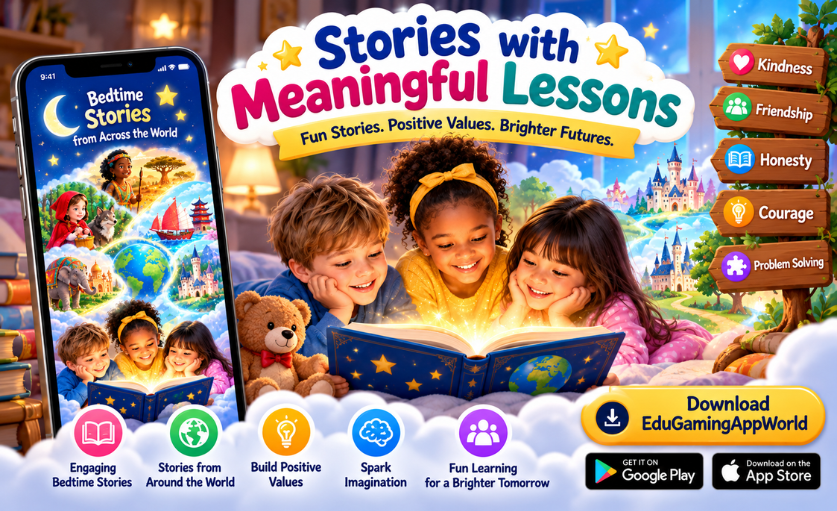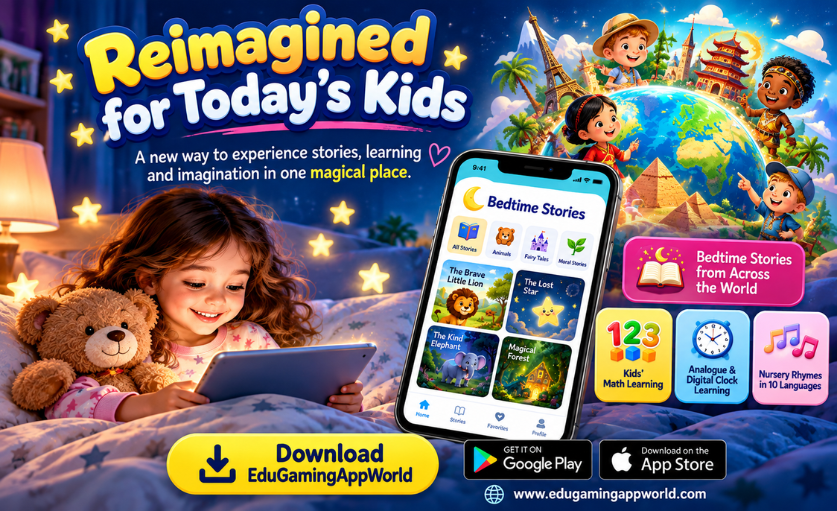
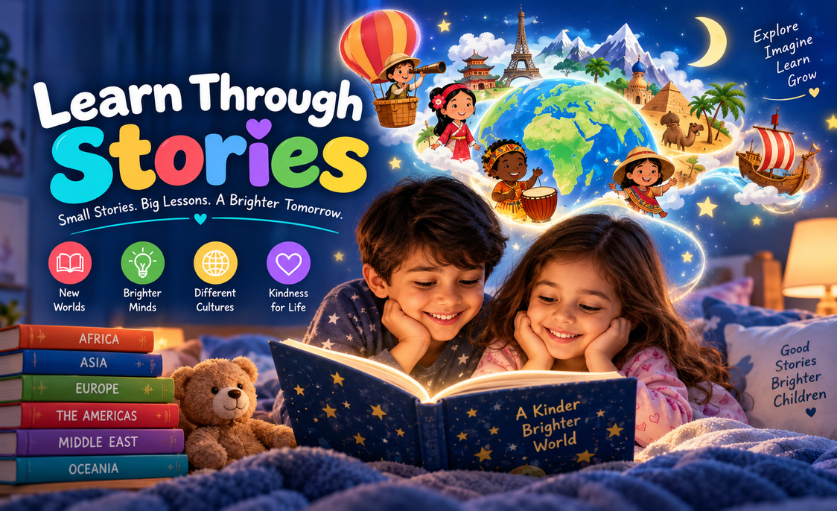
Bedtime is typically a special time in a child’s day – a peaceful period to unwind, interact with family and learn something new. Learn Through Stories is a chance for youngsters to explore language, concepts, emotions and the world around them – during this easy practice.
Stories help learning feel natural because kids follow characters, imagine new places, and experience problems and answers through a narrative. Picking bedtime stories for kids from various cultures also helps children learn about customs, beliefs, and viewpoints beyond their immediate world.
Bedtime reading for kids may be made more meaningful, while still being fun, with stories from throughout the world, from African folktales to Asian legends and European fairy tales.
What Is Learn Through Stories?
Learn Through Stories is using storytelling as a natural way to educate kids to new concepts, language, value and experience.
Instead of merely learning through straight explanations, youngsters meet ideas through characters and circumstances. For example, a narrative about a child assisting a buddy might convey kindness and collaboration. A hard choice story can get children thinking about decisions and consequences.
This strategy can help kids learn through storytelling, by blending amusement with chances to talk and think. Storytelling can be included in everyday early life learning for young children specifically, without making reading a formal lesson.
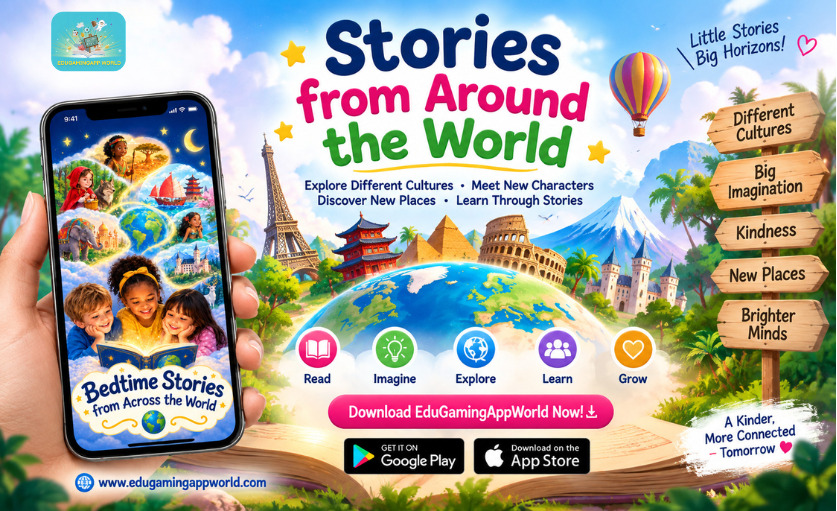
Why It Matters To Hear Stories From Around The World
Every culture has stories to share. Cultural stories for kids can expose youngsters to a variety of places, family traditions, community beliefs, and ways of seeing the world.
Reading world folktales for kids can ignite cultural curiosity. A narrative set in another country can be the beginning of queries like, “Where is that place?” or “Why do the characters celebrate that way?” Such queries can be beginning grounds for future learning.
International stories should be intelligently portrayed and not reduced to stereotypes. Parents can use them as an invitation to learn about the people, locations and traditions behind the stories.
Story Plus Learning
A bedtime story can introduce children to geography, food, wildlife, languages, traditions and history in a way that is accessible to them. A little talk after reading can help children make the link between a fictional event and the actual world.
How Children Can Learn From Stories At Bedtime
Vocabulary And Language Growth
Exposure to terms and sentence patterns that may not be heard in ordinary discussions is offered to young readers through listening to instructional stories for kids. Parents can pause for a moment to explain an unfamiliar phrase or have the youngster describe a character.
Listening And Understanding
Story time also provides children an opportunity to listen attentively and to follow the order of events. Asking basic questions like “What happened first?” or “Why did the character choose that?” will help understanding.
Creativity And Imagination
Stories encourage children to envision characters, places and activities in their thoughts. Once they’ve read it, children can doodle a favourite scene, make up an alternative ending, or construct a new character.
Critical Thinking And Problem Solving
In many children’s stories with morals, there is a problem that the protagonists must solve. Asking children what they believe might happen next is encouraging prediction and reasoning.
Lessons In Morality And Society
Moral stories for kids can help teach concepts like honesty, patience, courage, kindness, respect, and teamwork. Instead of lecturing the lesson, parents can ask youngsters what they observed and how they would react in a similar situation.
African Bedtime Stories Every Kid Should Listen To
African storytelling traditions contain a broad spectrum of folktales, mythology, and communal stories that span numerous areas. All these stories are not the same; each culture has its own traditions and ways of telling stories.
For bedtime reading, age-appropriate African folktales can be used to impart concepts like as community, wisdom, courage, kindness, responsibility, and respect. Many classic stories also feature animal characters, often allowing youngsters to understand human behaviour via memorable events.
Parents can help make these stories more fun by talking about the setting and telling children that Africa is a large continent with many distinct countries, languages and customs.
Children’s Stories From Other Cultures To Explore
There are storytelling traditions around the world for curious young readers.
In Asia there are many different traditions about families, nature, friends, courage and wisdom. Europe has a lengthy tradition of folktales and fairy tales in many different countries . Stories are passed down through generations .
Middle Eastern storytelling traditions consist of stories tied to adventure, wisdom, family, and imagination. Children can discover stories from numerous Indigenous and immigrant cultures around the Americas, understanding that these people have distinct histories and cultural identities.
It isn’t merely about collecting stories from various locations. Its aim is to enable youngsters to respond to other cultures with curiosity and respect.
Tips For Parents To Make Story-Based Learning More Effective.
Parents don’t need fancy activities to turn story time into participatory learning for children. A few simple behaviours can help make reading more fun:
Ask Questions Like: “What do you think will happen next?”
Talk About New Words: Pick one or two interesting terms from the story.
Forecasts: Before you unveil the next part ask the youngsters what the character may do.
Connect Lessons To Life: Discuss how kindness, patience, or teamwork exist in everyday life.
Encourage Re-Telling: Ask youngsters to tell the story in their own words.
Add Creative Activities: Drawing, acting or inventing a unique ending can convert reading into entertaining learning activities.
These simple encounters can help toddlers become active participants instead of passive listeners.
How Edugamingappworld Makes Story Time More Engaging
Digital storytelling can complement traditional books by offering families an additional means of enjoying informative bedtime stories. The Bedtime Stories area of EduGamingAppWorld provides a dedicated space for families that want to explore stories as part of children’s reading and learning routines.
For parents, it’s about picking age-appropriate content and using story time as an opportunity for communication. Whether youngsters read independently, listen to a parent read, or discuss a story afterward, storytelling can be a natural element of a family’s nightly ritual.
Stories can do more than amuse children before they sleep. They can spark talks about language, emotions, creativity, values, cultures and the larger world. Learn Through Stories makes bedtime reading a fun and meaningful experience.
By examining African folktales, Asian traditions, European stories, Middle Eastern narratives, and storytelling traditions from the Americas, youngsters can find new views and foster a lasting interest in reading.
For families seeking for fascinating bedtime stories for kids, try the Bedtime Stories experience from EduGamingAppWorld and turn tonight’s reading time into an opportunity to discover a new story, culture and idea.
DOWNLOAD APP
Google Play Apple App
FAQ
What does Learn Through Stories mean?
Learn Through Stories means using storytelling as an enjoyable way for children to develop language, imagination, values, comprehension, and general knowledge.
How can children learn through stories?
Children can learn through stories by listening to characters, understanding events, discovering new vocabulary, predicting outcomes, and discussing the lessons or ideas presented in the story.
Why are bedtime stories good for children?
Bedtime stories can encourage reading habits while helping children practice listening, comprehension, imagination, and language skills in a relaxed environment.
Can stories from different cultures help children learn?
Yes. Stories from around the world can introduce children to different traditions, settings, characters, and perspectives while encouraging cultural curiosity and understanding.
What are educational stories for children?
Educational stories for children are age-appropriate narratives that combine entertainment with opportunities to learn concepts, vocabulary, values, problem-solving, or social skills.