


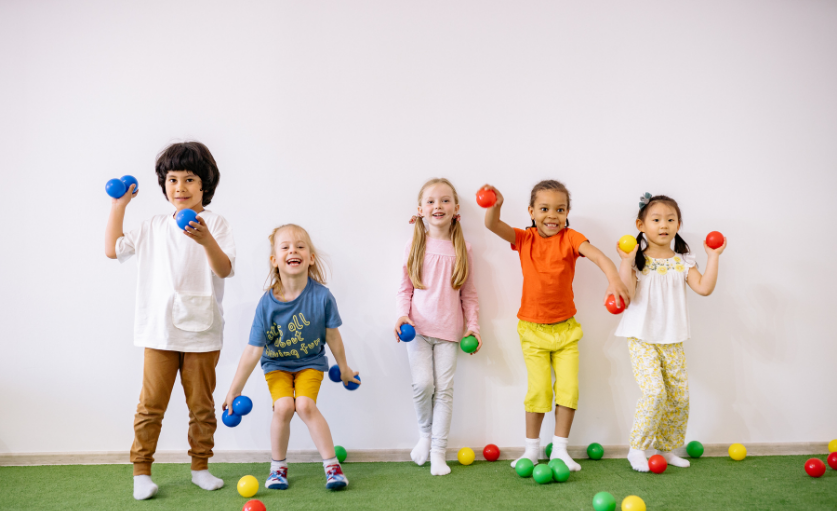
Early childhood is not the time for worksheets, pressure, or rote learning. It’s the time when the brain is wiring itself at record speed. If you get this stage right, everything that follows becomes easier. If you get it wrong, children spend years trying to “catch up.” That’s exactly why Preschool Maths Games matter more than most parents and educators realize.
Why maths in preschool is non-negotiable
By age five, a child’s brain is already about 90% developed. Research from Harvard University shows that early numeracy skills are stronger predictors of later academic success than early reading skills. In simple terms: children who understand numbers early don’t just do better in maths—they do better in school overall.
Yet many adults still assume maths should wait until “real school” starts. That’s a mistake. Preschool maths isn’t about equations or memorization. It’s about patterns, quantities, comparison, and logic—skills children use every day without realizing it.
Learning Through Play Actually Works
Let’s be blunt: children don’t learn well when they’re bored. They learn when they’re engaged. According to a study published in Early Childhood Research Quarterly, play-based learning can improve problem-solving skills by up to 30% compared to traditional instruction at the preschool level.
That’s where Preschool Maths Games come in. Games transform abstract ideas into experiences. Counting becomes sharing snacks. Shapes become building blocks. Measurement becomes filling a cup with water.
A Real-Life Example Every Parent Will Recognize
Imagine a four-year-old helping in the kitchen. You ask them to put three apples in a bowl. They count aloud, sometimes skipping a number, sometimes starting over. This isn’t “cute”—this is mathematical thinking in action. They’re learning quantity, order, and correction.
Now imagine that same child playing a game where they sort objects by size, match numbers to quantities, or identify patterns on a screen that reacts instantly to their choices. The feedback is immediate. The learning sticks.
Children who regularly engage in maths-based games show higher confidence in problem-solving tasks. Confidence matters because kids who feel capable are more willing to try, fail, and try again.
What Makes Maths Games Effective (And What Doesn’t)
Not all games are created equal. Slapping numbers onto a flashy screen doesn’t magically create learning. Effective preschool maths games share a few critical traits:
- Simple rules that match a child’s cognitive level
- Immediate feedback so children understand cause and effect
- Progressive difficulty that grows with the child
- Visual and interactive design to hold attention without overwhelming
If a game feels like a test, it’s already failed.
The Role Of Digital Learning—Used Correctly
Screen time is a loaded topic, but here’s the reality: digital learning isn’t going away. The question isn’t whether children will use apps, but which ones.
A 2023 global education report found that children using structured educational apps for 20–30 minutes a day showed measurable improvements in logical reasoning and attention span within eight weeks. The key word here is structured. Random videos don’t teach. Purpose-built learning tools do.
Why Choosing The Right Platform Matters
This is where Edugamingappworld stands out.
How Edugamingappworld Supports Early Maths Learning
Edugamingappworld is designed as a next-generation educational learning platform for children and young adults. Its approach goes beyond surface-level learning. The focus is on developing cognitive abilities, creativity, imagination, decision-making skills, and teamwork—all essential foundations for maths and logical thinking.
For preschool learners, the platform uses interactive maths games that adapt to a child’s responses. If a child struggles, the system adjusts. If they excel, it introduces new challenges. This avoids two common problems: frustration and boredom.
Parents and educators choose Edugamingappworld because:
- Learning is play-driven, not forced
- Skills are built progressively, not randomly
- Children stay engaged without being overstimulated
- The platform supports both independent learning and guided play
From a service-seeker’s perspective, this matters. You’re not just buying an app—you’re investing in a learning system that respects how children actually think and learn.
The Long-Term Payoff
Children exposed to strong early maths experiences are more likely to:
- Perform better in primary school
- Develop logical reasoning skills earlier
- Approach challenges with confidence
- Show persistence in problem-solving tasks
These aren’t “nice-to-have” traits. They’re life skills.
Final Takeaway
Preschool maths isn’t about pushing kids too hard too early. It’s about giving them the right tools at the right time. Preschool Maths Games work because they align with how young minds grow—through play, curiosity, and exploration.
If you’re a parent, educator, or service seeker serious about building a strong learning foundation, don’t wait for formal schooling to begin. The groundwork is being laid right now. Choosing a thoughtful, research-backed platform like Edugamingappworld can make the difference between a child who fears numbers and one who sees them as a game worth playing.