When kids can experiment with new ideas, early learning becomes more relevant. During their early years, children learn fundamental abilities such as numbers, counting, patterns and simple mathematics. Preschool Maths may be made to feel a lot easier with colorful, interactive and fun learning exercises (instead of repetitive ones).
Edugamingappworld makes educational ideas come alive in digital fun. Children discover numbers and basic mathematical ideas thru games, quizzes, animations and progressive activities. The objective is to make learning pleasurable, fostering confidence and curiosity in young students.
Why Maths Matters In Early Childhood Learning Preschool
Maths is involved in many everyday tasks. When children play with toys, they count. They recognize how many there are, they share out objects, they know how many things they have. Introducing mathematical ideas thru age appropriate activities can help children get familiar with numbers in a natural way.
Good Preschool Maths activities should inspire children to look, ponder, answer and try again. Games with interaction can provide a joyful setting in which youngsters can practice basic ideas without feeling pressured.
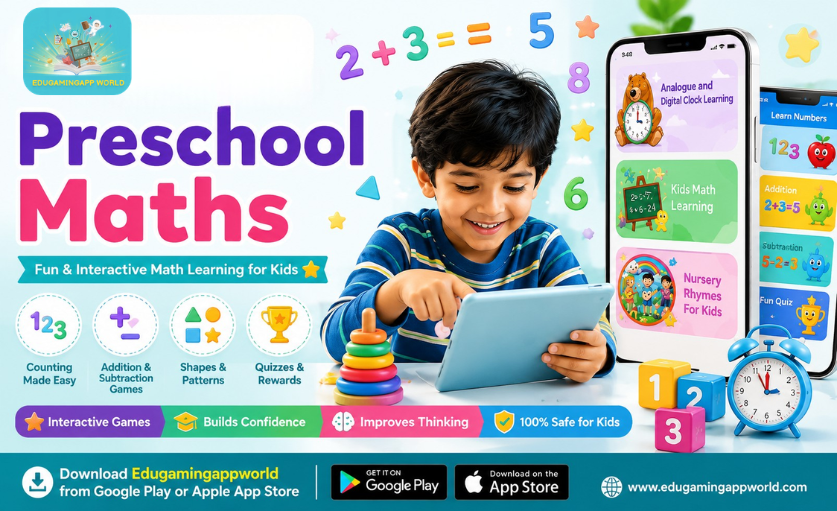
Edugamingappworld supports this method with enjoyable games for children ages 1-9 including number recognition, counting, basic operations, shapes, logic and interactive obstacles.
Developing Strong Counting Skills
Counting Thru Hands-On Activities
Counting is one of the first abilities youngsters need as they begin their mathematical adventure. First a youngster can recognize numbers . Then the child can gradually relate numbers to amounts .
Make counting fun with interactive games. Children do not just recite numbers in sequence, they count items, recognize quantities and answer simple questions. Colorful animations might help to keep children interested while they are practicing.
Preschool Maths promotes frequent practice of counting, so that children get more familiar with recognizing numbers and comprehending the link between numbers and amounts.
Number Recognition Development
Number recognition helps children to see the digits and understand what they signify. Learning to discriminate between numbers like 1 , 2 , 3 etc. prepares kids for future arithmetic concepts .
Kids learn about numbers in a colorful visual way and a joyful learning experience with eduGamingappworld. Children can practice recognizing numbers and find shapes and patterns.
The advantage of progressive learning is that students can start with fundamental concepts and then progress to more difficult tasks as they gain skills.
Fun Addition & Subtraction Games
Playing To Learn Basic Operations
If the kids are comfortable with numbers and counting, simple addition as well as subtraction can be taught using age-appropriate activities. For instance, students can learn about what happens when objects are added to or deleted from a group.
These topics can be made into tiny challenges with Game-based Preschool Maths exercises. Children don’t just memorize the answers, but work thru the questions and practice doing them step by step.
Simple subtraction and addition activities and early multiplication ideas are available at Edugamingappworld. Interactive challenges allow children to practise and colorful animations and awards make the experience fun.
Edugamingappworld’s Benefits For Early Maths Learning
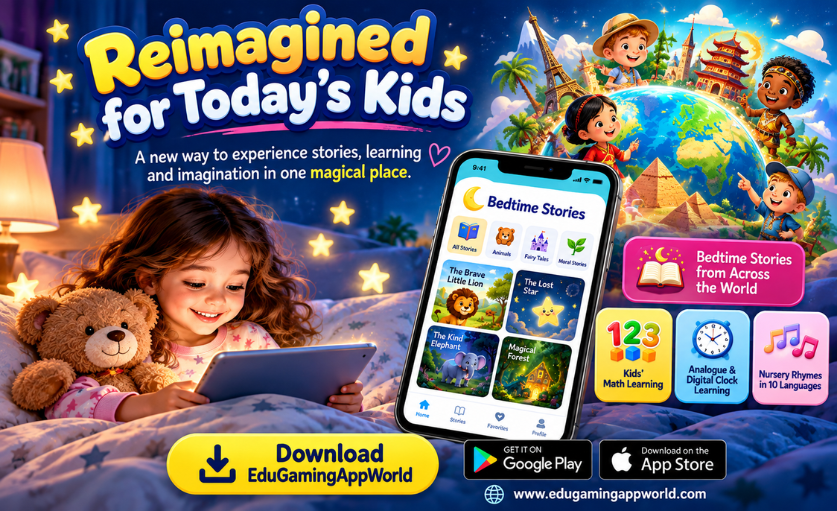
Edugamingappworld is an app that mixes learning and play with features that are designed to help little learners.
- Playful Math Animations: Fun numbers with colorful characters and animations.
- Math Games & Quizzes: Practice solving problems with interactive challenges.
- Progressive Learning Levels: Activities can move from simple to more complex ideas.
- Rewards & Motivation: The use of stars, badges and celebrations motivates children to practice more.
- Number Recognition & Counting: Kids may learn about numbers, shapes, and patterns.
- Basic Math Operations: Activities introduce addition, subtraction and early multiplication.
- Shapes & Logic Skills: Activities develop logical and visual thinking.
- Math Confidence: Consistent practice builds focus, precision and confidence.
These features are designed to make the practice of Preschool Maths more interactive and accessible to youngsters who enjoy learning thru play.
An Example In Practice
Picture a child helping to sort out toys at home. A parent asks the child to count five toy blocks and then adds two additional blocks. Then the youngster counts the new total . Thru a familiar situation the child learns to understand the notion behind addition .
Later the child can practice a similar topic in Edugamingappworld with an interactive maths activity. Relating common experiences to digital exercise may help the understanding and retention of arithmetic ideas.
This blend illustrates how Preschool Maths can be included into natural play and everyday routines rather than a separate school job.
Preschool Maths may be a fun aspect of childhood when children are provided opportunities to learn thru play, exploration and interactive practice. Counting, number recognition, addition, subtraction, shapes and logic skills can all be taught using simple, fun games.
Edugamingappworld combines these ideas with colorful animations, arithmetic games, quizzes, increasing levels and incentives. It creates a fun atmosphere for youngsters to practice basic skills and develop confidence and curiosity.
Want to make learning numbers more fun? Download the Edugamingappworld app today and let your child learn, play, practise and grow thru fun educational activities.
DOWNLOAD APP
Google Play Apple App
FAQ
What is Preschool Maths?
It covers foundational mathematical concepts such as counting, number recognition, basic addition, subtraction, shapes, patterns, and early problem-solving.
How can children learn maths through games?
Games can turn mathematical questions into interactive challenges. Children can practise concepts while exploring visuals, answering questions, and receiving positive feedback.
What can children learn with Edugamingappworld?
Edugamingappworld offers activities involving counting, number recognition, shapes, logic, addition, subtraction, early multiplication, games, quizzes, and rewards.
Can maths activities be part of everyday play?
Yes. Counting toys, sorting objects, recognising numbers, and comparing quantities are simple ways to introduce maths during everyday activities.
Why is interactive learning useful for young children?
Interactive learning can make practice more engaging and give children opportunities to explore concepts, solve challenges, and practise skills repeatedly.